
POTA and SOTA are popular activities these days. It is common to meet POTA enthusiasts who want to believe their activity equates with preparing for emergency communications. So, let’s examine this assumption.
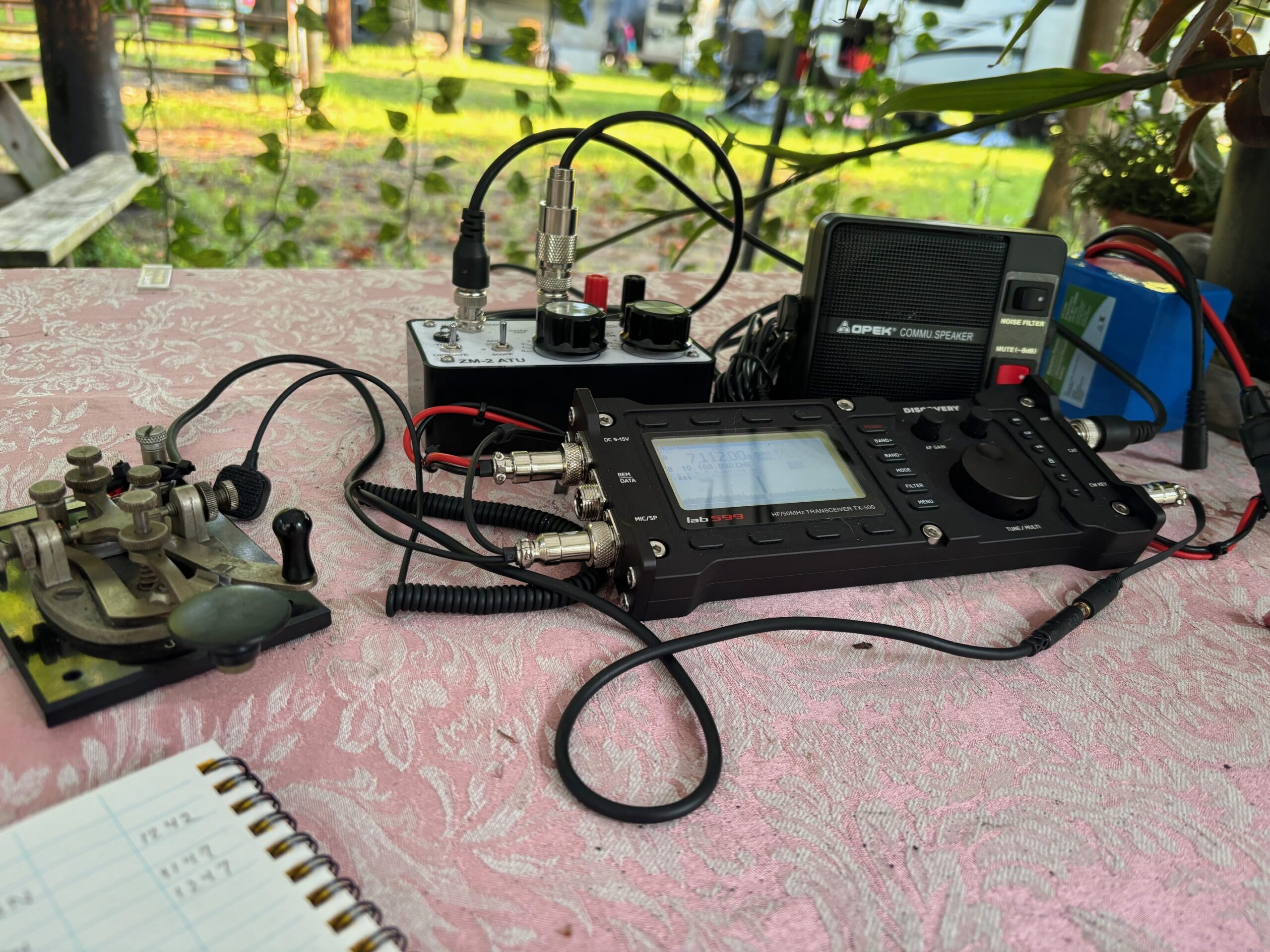
There is no doubt that activities like SOTA have some preparedness benefits. It’s an opportunity to experiment with portable antennas and power supplies, build up a reliable kit, and learn a bit about operating in the field. In these respects, it’s rather beneficial. However, these benefits are only a part of the EmComm picture.
During an emergency, particularly something catastrophic in which one would need to deploy low-power battery operated HF equipment in the field, the game changes considerably. Efficient EmComm requires participation in nets or establishing contact with a station that has access to circuits capable of providing connectivity to EmComm infrastructure.
POTA and SOTA are activity is essentially a game in which propagation and predictability write the rules. One establishes communications with stations that ionospheric propagation favors, and the information exchanged is simplistic and predictable contest exchanges.
In a real emergency, the requirements differ considerably. Consider these facts:
- The information transmitted and received will vary considerably and may be quite complex. For example, one may need to transmit geodetic coordinates, requests for supplies, situation reports, or medical data.
- One will need to have the tools necessary to transcribe messages for delivery to a relief agency or emergency services official. It will also be necessary to keep a copy of that message for your records. This may be as simple as a book of message forms and a pencil, but it also requires that one has the skills to accurately transcribe an incoming message.
- One must have a “traffic quality” signal. There is a big difference between a contest type activity in which the information exchanged is predictably easy to copy due to a consistent pattern, and attempting to copy a weak station transmitting a radiogram with a variety of complex or unpredictable content.
- A radiotelegraph (CW) operator must know how to understand net instructions, prosigns, and other protocols without “gumming-up” the net, whereas a voice operator must be very conversant in the ITU phonetic alphabet and the techniques to be utilized when the operator receiving your message traffic reports your signal as “weak readable.”
From horsemen to hams, every activity seems to develop its own folklore. One of the most destructive folktales within ham radio is the “contesting equals preparedness” story. Criticism of this myth seems to be a bit like touching the proverbial “third rail.” When one challenges the myth, the hackles go up and the contest community bites like a rabid dog. Yet, objective truth is immutable:
Exchanging 599 signal reports and a location or serial number repeatedly for hours does NOT prepare one for emergency operations.
Enjoy POTA, enjoy contests, but don’t assume that it comprehensively prepares you for real public service communications. Instead, use the portable operating sessions to occasionally check into a section traffic net or perhaps one of the wide-coverage independent traffic nets. This allows one to learn the protocols and hear some messages being exchanged. RRI publishes an excellent, curated net directory in with times and frequencies for nets throughout North America are listed.
Integrate some net operation into your POTA activities. Try receiving or transmitting a few radiograms. You will then discover the limitations and benefits of your portable station in an operational environment that better approximates real-world EmComm conditions.